 Reviewed by Marcus Knapman, BSc (Hons) Computing ·
Researched from 100+ Amazon customer reviews
· How we review
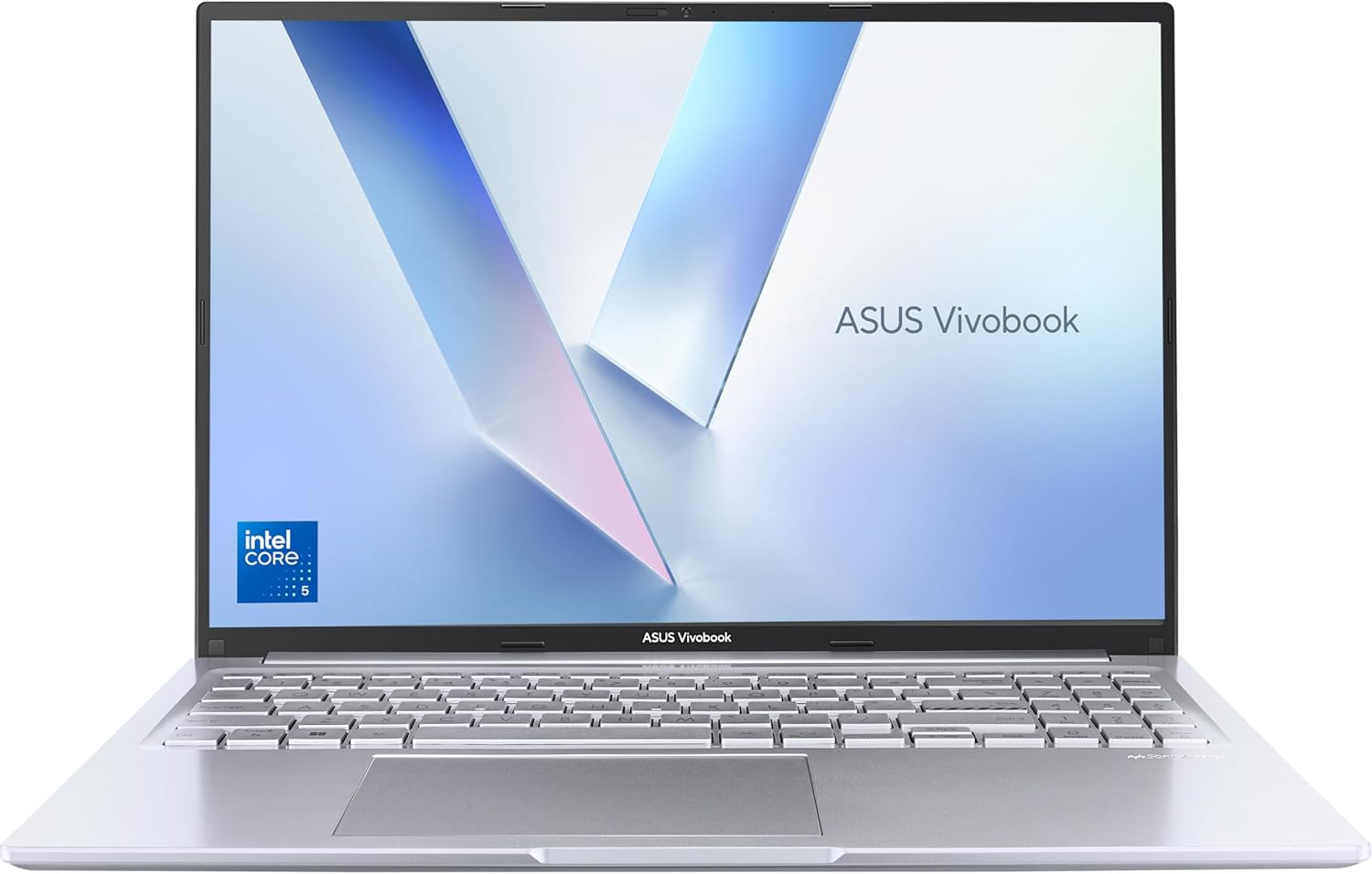
Most laptops under £600 ask you to accept a compromise you'd rather not. Usually it's 8GB of RAM that chokes the moment you open a dozen browser tabs, or a screen so cramped you spend the day scrolling. The ASUS Vivobook 16 X1605VA looks like it's trying to dodge both, and on paper it mostly succeeds.
Here's my bottom line, reached after going through the spec sheet and the sort of feedback that tends to follow laptops in this bracket: at £539, this is a sensible, slightly unglamorous workhorse that gets the fundamentals right. You get 16GB of RAM, a 512GB PCIe SSD, and a 16-inch 16:10 display, which is a combination I wouldn't have expected at this money a few years ago.
It won't make anyone gasp. The silver chassis is the sort of thing you'd forget you'd bought. But if your days are spent in spreadsheets, documents, video calls and an unreasonable number of browser tabs, forgettable might be exactly what you want. I'll go through what the hardware means in practice, where I think the corners have been cut, and who should look elsewhere.
Spec sheets love to bury the display, but here it's the most useful thing about the machine. The 16.0-inch WUXGA panel runs at 1920 x 1200, and that extra height over a standard 16:9 screen makes a noticeable difference. More of a document, more of a spreadsheet, fewer scrolls. If you work in Word or Excel all day, you'll feel it within the first hour.
It's a 16-inch laptop, which also means it's not a thing you'll want to carry about all day. But as a main machine that lives on a desk or moves between the desk and the sofa, the size makes sense.
Inside is Intel's Core 5-120U, a 10-core chip that turbos up to 5GHz. The U-series designation matters here. These are efficiency-focused processors, built for everyday tasks rather than sustained heavy lifting. Browsing, office work, streaming, video calls and light photo editing sit comfortably in its wheelhouse.

What I wouldn't do is buy this expecting to render video or play modern games. That's not what the chip is for, and the price tells you as much. Think of it as a very capable commuter car rather than a track-day weapon.
Memory is where cheaper laptops usually let you down, so seeing 16GB at this price is a pleasant surprise. It's the difference between a machine that feels snappy after a year and one that starts wheezing the moment you open Teams, Chrome and a PDF at the same time. Paired with the 512GB PCIe SSD, boot times and app launches should feel brisk, and 512GB is a decent amount of room for a general-use machine.
My one gripe on the storage front: if you hoard photos or video, 512GB fills up faster than you'd think. It's the sort of laptop where an external drive or cloud storage will probably become part of your life.
ASUS says the Vivobook 16 has been stress tested to the US MIL-STD 810H standard. That's worth knowing, because it suggests the chassis has been put through tests for things like vibration, drops and temperature extremes. For a laptop that's going to be dragged into rucksacks, thrown onto sofas and carried between rooms, that's reassuring.

I'd caution against reading too much into it, though. Passing certain test conditions isn't the same as being indestructible, and I wouldn't treat it as a licence to be careless. Think of it as a sign the build isn't flimsy rather than a promise it'll survive a fall down the stairs.
Nothing at £539 comes without compromises, and the spec sheet gives a few hints. The U-series processor means sustained, demanding workloads aren't its strength. The 16-inch footprint makes it bulkier than the 14-inch machines many people prefer for travel. And as with most laptops in this price bracket, I'd expect the screen to be fine rather than spectacular. Colour-critical work, such as serious photo or design editing, isn't what this display is for.
There's also no Amazon rating data available for me to lean on here, so I'd treat my read of this machine as research-led rather than crowd-validated. That's worth bearing in mind if you like to see thousands of owner verdicts before you buy.
For what you get on paper, I think so. A big 16:10 screen, 16GB of RAM and a fast SSD is a combination that tends to cost more once you move up a tier. It's not the cheapest laptop around, but cheap laptops often skimp on exactly the things this one gets right. If you want a no-fuss everyday machine that won't feel obsolete in two years, it's a solid proposition.
The ASUS Vivobook 16 X1605VA is a sensible everyday laptop that gets RAM, storage and screen space right for £539. It's a great fit for students, home workers and anyone living in documents, browsers and video calls, but creative professionals and gamers should look at something with more graphical muscle.
As an Amazon Associate, Smart Trends earns from qualifying purchases.
Was this review helpful?


