Reviewed by Marcus Knapman, BSc (Hons) Computing ·
Researched from 100+ Amazon customer reviews
· How we review
Reviewed by Marcus Knapman, BSc (Hons) Computing ·
Researched from 100+ Amazon customer reviews
· How we review
Finding dead batteries in your car key fob at the worst possible moment is one of life's minor irritations that feels majorly inconvenient. I've been there—standing in a car park, frantically pressing buttons on a completely unresponsive remote whilst juggling shopping bags in typical British drizzle. The Duracell 2025 Lithium Coin Batteries promise not just longer life than standard alternatives, but also bring some interesting safety features that set them apart from the usual suspects you'll find on supermarket shelves.
At £5.69 for four batteries, these aren't the cheapest CR2025s you can buy, but Duracell claims up to 70% extra life compared to the standard test duration. More intriguingly, they've added what they call "Baby Secure Technology"—a bitter coating designed to discourage curious toddlers from swallowing them. After digging into the specs and considering what makes these different, I found the safety angle genuinely worthwhile, even if it comes at a premium.
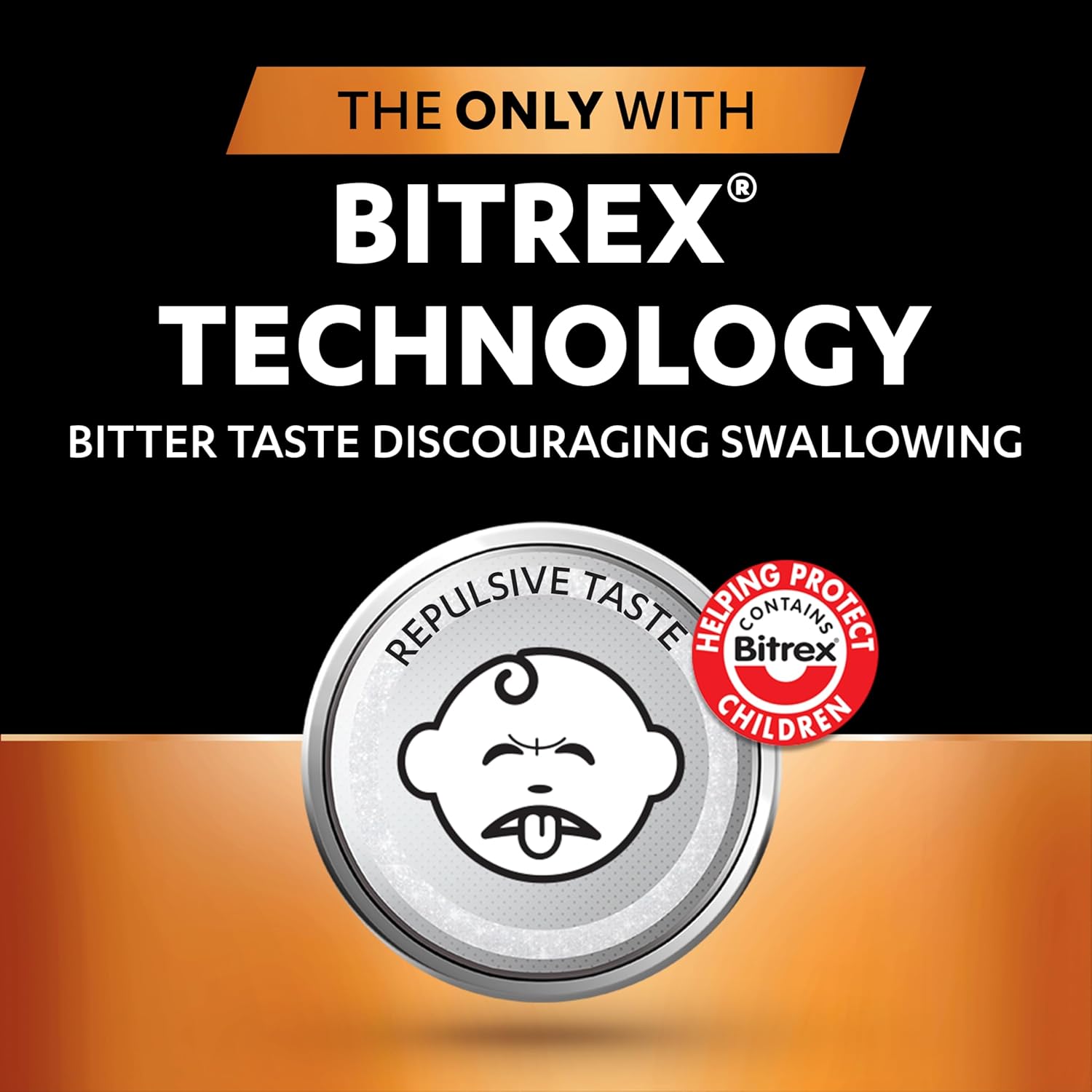
The standout feature here isn't the performance claims—it's the child safety technology. Duracell has applied a non-toxic bitter substance called Bitrex to both sides of each battery in a ring pattern. If a small child does manage to get one in their mouth, the intensely bitter taste should encourage them to spit it out rather than swallow.
This isn't marketing fluff. Button batteries pose a real danger to children—they can cause serious internal burns if swallowed. The packaging backs up the safety theme too, with a double blister design that requires scissors to open properly. It's a bit fiddly for adults, but that's rather the point.
Duracell developed this in partnership with the European Association of Paediatrics, and whilst I can't test the bitter coating myself (thankfully), the concept addresses a genuine safety concern that other manufacturers largely ignore.
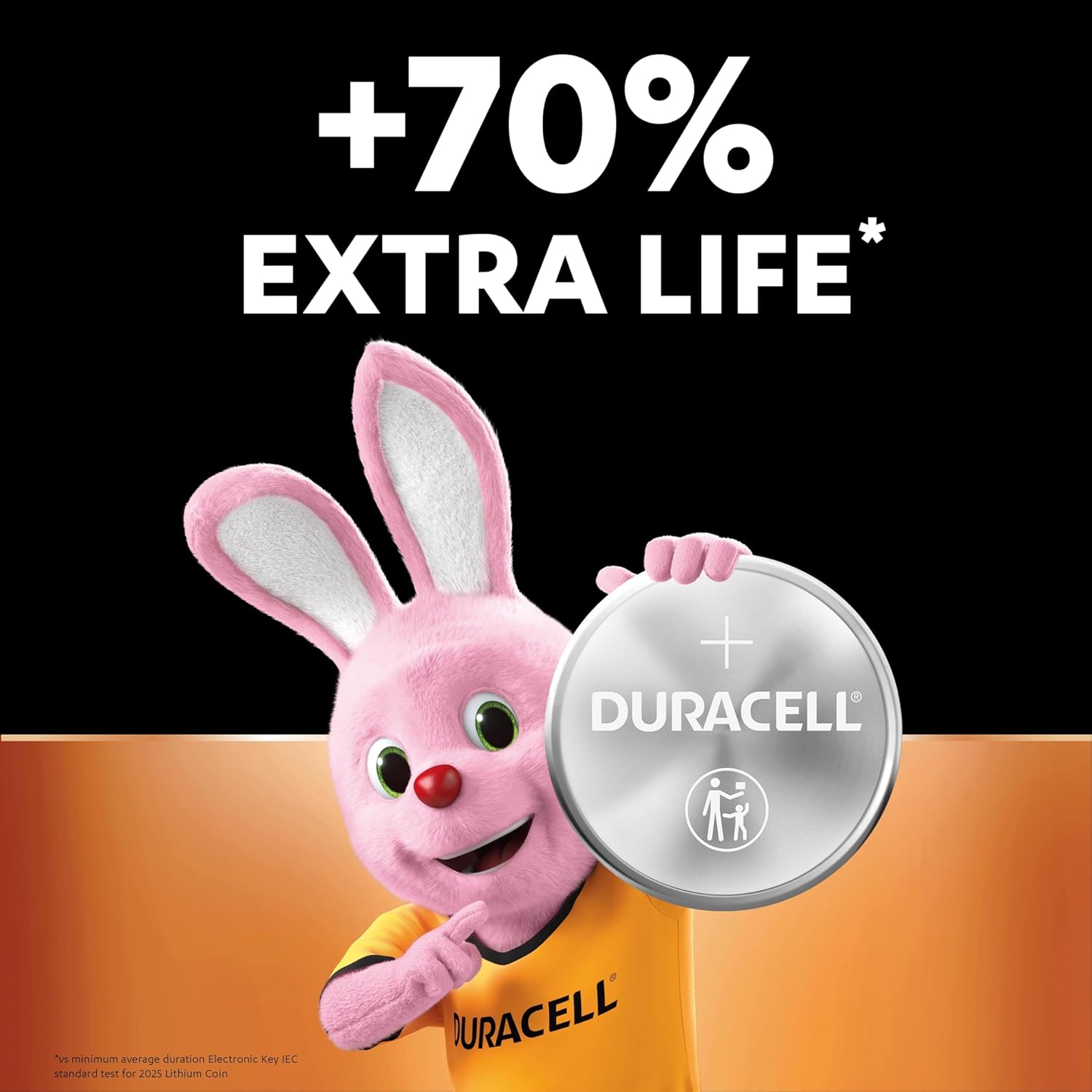
Duracell's "up to 70% extra life" claim is based on comparison against the minimum average duration in the IEC standard test for 2025 lithium cells. That's a fairly specific benchmark, and the key phrase is "up to"—your mileage will vary depending on what device you're powering.
CR2025 batteries typically get used in low-drain devices like key fobs, fitness trackers, and car remote sensors. In these applications, even standard lithium cells can last years, so the practical benefit of extra longevity might not be immediately noticeable. You're unlikely to be timing your key fob battery life with a stopwatch.
The 10-year storage guarantee is more tangible. These batteries should hold their charge sitting in a drawer for a decade, which matters if you're stocking up or keeping spares for emergency use. That's standard for quality lithium coin cells, but worth noting.
Four CR2025 batteries for £5.69 works out to about £1.42 per cell. That's definitely premium pricing—you can find generic CR2025s for half that if you shop around. The question is whether the safety features and brand reliability justify the extra cost.
For households with young children, I'd argue yes. The potential medical costs and trauma of a button battery incident far outweigh the extra pound or two you'll spend on safer batteries. For everyone else, it depends how much you value the Duracell name and those longevity claims.
The packaging feels robust, and you get the reassurance of a major brand behind the product. Duracell has been making batteries since 1924, and whilst that doesn't guarantee these specific cells are perfect, it does suggest they're not cutting corners on quality control.
The child-resistant packaging, whilst serving its purpose, can be genuinely annoying when you need a battery quickly. You will need scissors—trying to tear it open by hand is an exercise in frustration that usually ends with battery-shaped dents in your fingers.
The bitter coating, whilst serving its safety purpose, does mean you'll want to wash your hands after handling these batteries. It's not exactly pleasant if you accidentally touch your mouth afterwards, though I suppose that proves it works.
If you have young children in the house, the safety features alone justify the premium price. For everyone else, these are quality batteries from a trusted brand, but you're paying extra for peace of mind rather than dramatically better performance. Generic alternatives will do the job for less money.
As an Amazon Associate, Smart Trends earns from qualifying purchases.
Was this review helpful?