 Reviewed by Marcus Knapman, BSc (Hons) Computing ·
Researched from 100+ Amazon customer reviews
· How we review
Is there a more thankless purchase than AA batteries? Nobody gets excited about them. You only notice them when the TV remote dies halfway through the match, or the smoke alarm starts chirping at 3am like a particularly smug cricket. So the aim is simple: buy a lot, spend as little as sensible, and forget about the whole thing for a year or two.
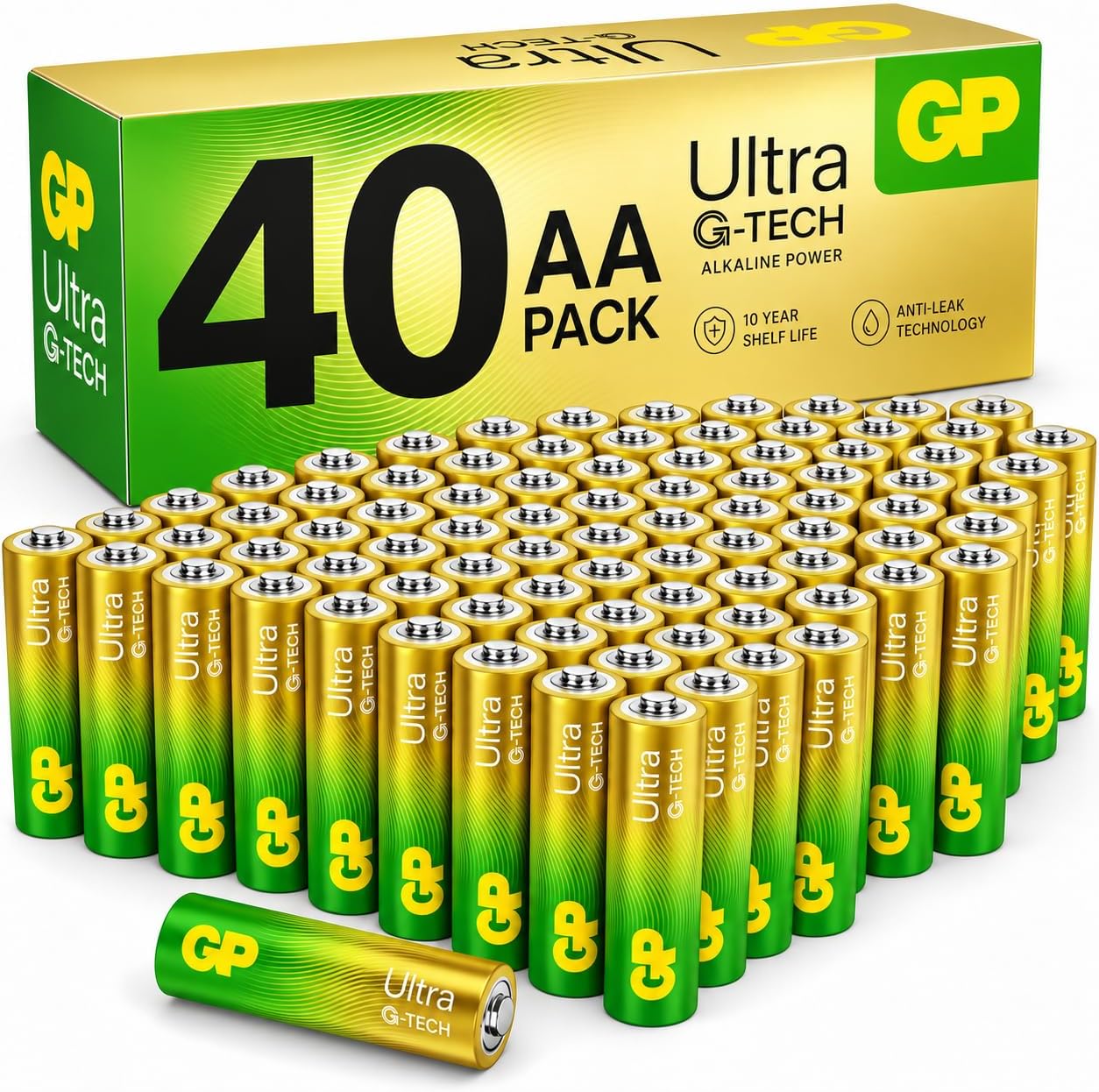
That's the pitch behind the GP AA Batteries 40 Pack. Forty alkaline cells for £12.74 works out at roughly 32p each, which is the sort of figure that makes a multipack of big-name batteries look faintly ridiculous. The question, as ever with cheap power, is whether you're getting a bargain or just a drawer full of disappointment.
Having been through the spec sheet and the available test claims, my view is that this is a sensible bulk buy for most households, with a couple of caveats I'll get to. It's not going to transform your life, but then no battery ever has. If it does the boring job quietly and doesn't leak into your kids' toys, it's done what it set out to do. There's no Amazon rating to lean on here, so I'm judging it on the claims, the chemistry and the price.
The pack comes as four strips of ten, which is a smarter bit of packaging than it sounds. Rather than a loose rattling brick, you can hand a strip to a drawer in the kitchen, one to the toy cupboard, and keep one back for emergencies. It sounds trivial until you've spent ten minutes hunting for fresh cells while a controller sits there flashing its low-battery light at you.
At £12.74, the per-cell cost is the headline. GP also sells this in 18-pack and 80-pack sizes, so you can scale up or down, but 40 feels like the sweet spot for a normal home: enough to stock every device without committing to a lifetime supply.
Most people fixate on how long a battery lasts in use. I'd argue shelf life is the bigger deal with a 40-pack, because you will not use forty AAs quickly. They'll sit in a cupboard for a long time. GP says these retain their full charge for up to 10 years in storage, which is what makes buying in bulk sensible rather than wasteful.

That's a manufacturer figure, so treat it with the usual healthy scepticism. But it fits the use case: torch and radio supplies for power cuts, spare cells for Christmas lights that come out once a year, the odd battery-hungry gadget that appears at Christmas. Buy once, store, forget.
GP quotes 44+ hours in a wireless mouse and 90+ hours in a portable radio. Those are decent, believable numbers for an alkaline cell, and they sit in the range you'd expect rather than anything outlandish. Notice what the figures don't tell you: how they compare to a premium brand head to head. GP is pitching this as premium alkaline performance at a fraction of the price, and I'd read that as 'close enough that you won't notice' rather than 'beats the market leaders'.
The cells are designed for both high-drain devices like controllers, torches and motorised toys, and low-drain ones like clocks, remotes and scales. In practice, alkaline is always at its happiest in the low-drain stuff. If you're running a power-hungry camera flash or something that chews through cells in an afternoon, rechargeables are the better long-term answer and I'd not pretend otherwise.
Leaking batteries are the great unspoken horror of household life. You open a remote and find a crust of white crystals where the contacts should be. GP's anti-leak construction is designed to prevent exactly that, and the company says it's safe to leave these installed in children's toys, smoke alarms, TV remotes and game controllers.

It's a reassuring claim, and it matters, because the devices where people leave batteries for years are the ones where a leak does the most damage. That said, no alkaline is leak-proof forever. If a battery has been sitting flat in a device for a long stretch, take it out. I'd treat the anti-leak feature as a safety net, not a licence to neglect things.
GP isn't a household name in the UK the way some rivals are, and that's the main hurdle. The brand says it has powered homes and businesses in over 60 years across 100+ countries, and the cells meet international IEC and ANSI safety standards, with a 2-year manufacturer warranty on top. That's a reasonable credibility stack. But a big-name battery comes with decades of familiarity, and some buyers will always pay extra for that comfort.
There's also no Amazon rating available for me to quote, so I can't point to a mountain of buyer feedback as proof of consistency. That's a gap, and I'd rather flag it than paper over it. If batch-to-batch consistency matters to you, check recent buyer comments before ordering.
The sweet spot is the unglamorous stuff: remotes, wall clocks, bathroom scales, kitchen timers, smoke alarm backups, the kids' toys that make an unholy racket. Low-drain, leave-and-forget devices, where a cheap, long-storing cell makes perfect sense. For a console controller you're hammering every weekend, I'd still lean towards rechargeables, but for everything else, this is a tidy way to stock the house.
The packaging is also recyclable, which is a small but welcome touch. The batteries themselves still need taking to a proper collection point, mind, so don't bin them with the rubbish.
For stocking a whole house with batteries you'll use slowly, the GP AA Batteries 40 Pack is a smart, low-cost buy. If you want a familiar big-name label or you're powering something that drains cells daily, spend a bit more or go rechargeable.
As an Amazon Associate, Smart Trends earns from qualifying purchases.
Was this review helpful?