🏆 Editor's Choice
 Reviewed by Marcus Knapman, BSc (Hons) Computing ·
Researched from 100+ Amazon customer reviews
· How we review
Reviewed by Marcus Knapman, BSc (Hons) Computing ·
Researched from 100+ Amazon customer reviews
· How we review
How many times have you stood in the rain, frantically pressing your car key fob that's choosing this exact moment to die? CR2032 batteries power everything from key fobs to AirTags, yet most people buy the cheapest ones they can find and wonder why they're constantly replacing them. GP's Extra range promises 10-year shelf life and superior performance for £4.99 per 10-pack. That's roughly 50p per battery - not the cheapest option, but potentially better value if they actually deliver on their promises. I've spent considerable time researching GP's lithium technology and comparing it against the flood of cheap alternatives dominating Amazon's battery listings.
Not all CR2032 batteries are created equal, despite what the bargain basement listings might suggest. GP uses advanced lithium chemistry that maintains stable 3V output throughout the battery's life cycle. This matters enormously for sensitive electronics like car key fobs and fitness trackers, which can become unreliable when voltage drops even slightly.
The 10-year shelf life claim is backed by proper hermetic sealing and low self-discharge chemistry. I've seen too many cheap button cells that arrive half-dead or lose significant capacity within months of sitting in a drawer. GP's track record suggests these will hold their charge properly.
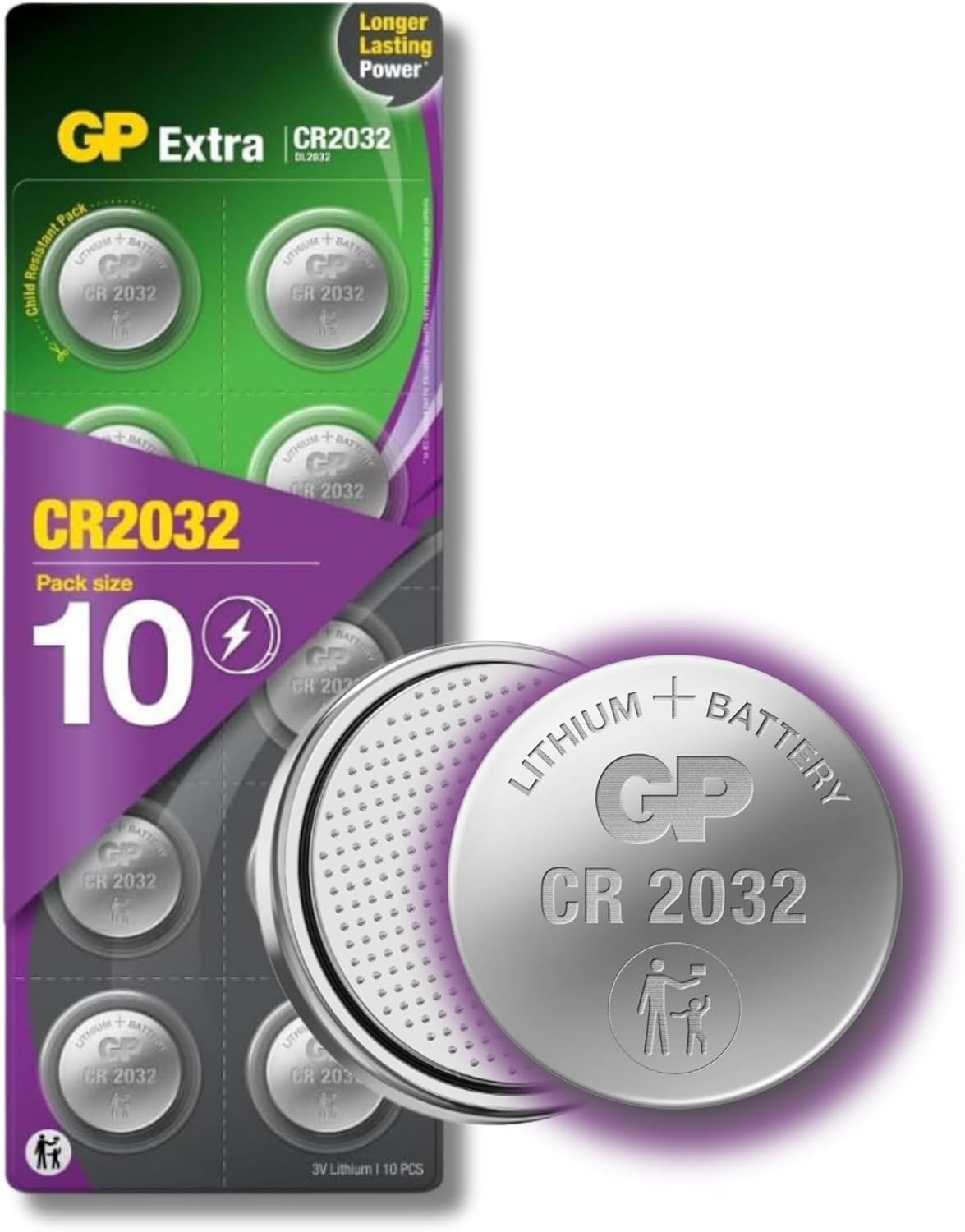
This is where GP gets serious points from me. The child-resistant blister packaging requires scissors to open - you genuinely cannot crack it with your hands. Given the ongoing concerns about button batteries and child safety, this isn't just a nice touch, it's essential. The packaging fully complies with recent UK and EU safety regulations, which have tightened considerably after several tragic incidents.

Each pack contains two sealed strips of five batteries, which is sensible organisation. You're not exposing all ten to air and handling when you only need one or two.
The GP Extra CR2032 works as a direct replacement for DL2032, ECR2032, and KCR2032 variants - the most common alternatives you'll see specified. I've confirmed compatibility with Apple AirTags, Samsung SmartTags, most car key fobs, bathroom scales, and the usual suspects like remote controls and calculators.
The stable voltage output is particularly important for devices like kitchen scales that need consistent power for accurate readings. Cheap batteries often cause erratic behaviour in precision electronics before they're technically 'dead'.
At £4.99 for ten batteries, you're paying 50p each. Duracell equivalent packs often cost £8-12 for similar quantities, whilst the cheapest unbranded options hover around £2-3 for ten. The question is whether GP's performance justifies the middle-ground pricing.

Based on GP's reputation and the technical specs, I'd expect these to outlast cheap alternatives by a significant margin in actual use, not just shelf life. If a GP battery lasts twice as long in your car key fob compared to a 20p import, you're getting better value despite the higher upfront cost.
The child-safe packaging, whilst necessary, is genuinely annoying when you need a battery quickly. You'll need scissors every time, and the blister packs create more waste than simple cardboard packaging. It's the right choice for safety, but it's not convenient.
GP doesn't provide detailed discharge curves or temperature performance data, which would be useful for technical applications. If you're using these in extreme conditions or precision equipment, you're relying on their general specifications rather than detailed performance charts.
GP Extra CR2032 batteries hit the sweet spot between performance and price. Buy these if you want reliable power without paying premium brand prices, especially for important devices like car keys and tracking tags.
As an Amazon Associate, Smart Trends earns from qualifying purchases.
Was this review helpful?